Accueil Outils et Consommables
Outils et Consommables
Soudage extérieur : choisir entre Stick, MIG et Flux‑core
Comparaison pratique des procédés Stick (SMAW), MIG (GMAW) et Flux‑core pour réparations en plein air selon vent, saleté, portabilité et épaisseur.
Gabriel Chevalier 8 min de lecture
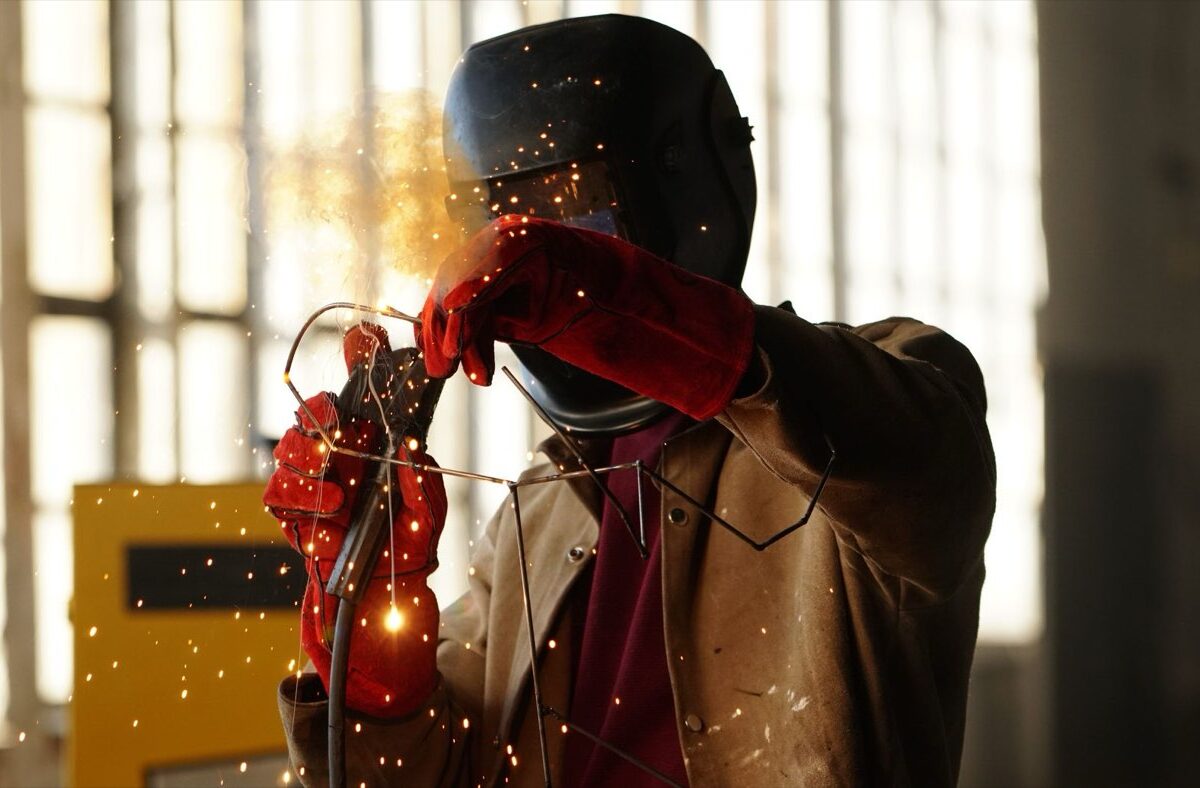
Quick answer: for outdoor field repairs where wind, dirt and portability matter, Stick (SMAW) or self‑shielded flux‑cored wires (FCAW‑S) are usually the more practical choices; MIG (GMAW) with gas is faster and cleaner but best used in calm or sheltered conditions or in the shop. This page compares the three on the same criteria to help pick the right process for farm, trailer, fence and general outdoor repairs.
Table of comparison — at a glance
| Criterion | Stick (SMAW) | MIG (GMAW) with gas | Flux‑Core (FCAW) / Gasless |
|---|---|---|---|
| Sensitivity to wind | High tolerance (no external gas) | Sensitive — shielding gas can be blown away | Good tolerance (self‑shielded types do not need bottle) |
| Surface cleaning required | Tolerates dirt, rust, grease better | Requires cleaner surface for best fusion | Better than MIG on dirty/rusty metal but still benefits from cleaning |
| Recommended thickness | Works well on thicker sections | Well suited for thinner sheet and lighter gauge in controlled settings | Good for thicker sections and higher deposition |
| Portability | Very portable — no gas bottle needed | Less portable if bottle required | Portable when using self‑shielded wire |
| Speed | Moderate deposition rate | Fast, efficient for continuous work in calm conditions | High deposition for thick work |
| Consumable cost | Electrodes consumed regularly (depends on job) | Wire + gas — cost varies by supply | Wire only for self‑shielded; no bottle when chosen |
| Finish | Rougher bead, more cleanup needed | Cleaner bead, better cosmetic finish | Rougher, more spatter than gas MIG |
| Learning difficulty | Requires learning electrode angle and rhythm | Relatively easy to learn for basic joints | Similar to MIG but with more spatter control needed |
| Typical use cases | Field repairs on farm equipment, trailers, fences | Shop work, thin sheet repairs, where finish matters | Outdoor repairs where gas is impractical, heavy fill work |
Why wind and surface condition matter for outdoor welding
Shielding gas protects the molten weld pool from atmospheric contamination. When that gas is displaced by wind, the weld can develop porosity that weakens the joint. MIG with external gas protection is therefore vulnerable in windy outdoor conditions unless the work is sheltered. Sources that compare MIG sensitivity with stick and flux‑core explain this mechanism and its practical consequences for field work.
Surface contamination such as rust, scale, oil or paint interferes with consistent fusion. Processes that generate their own shielding or that tolerate dirty metal are preferred where cleaning the workpiece thoroughly is impractical. Industry and field guides commonly recommend processes with self‑contained flux for repairs done on tractors, trailers and farm structures.
Standards guidance and trade publications also advise extra caution around extreme weather and wet surfaces; even tolerant processes have limits and certain conditions require protection or postponement. For any repair that is critical to safety or compliance with structural codes, a qualified professional should be consulted.
Option 1 — Stick welding (SMAW): strengths and limits
Strengths: Stick welding does not require an external gas cylinder because the electrode coating produces the shielding gases during burning. That makes SMAW robust in the field, especially when wind or light rain is present. It also tolerates dirt and rust better than gas‑shielded MIG and is frequently recommended for farm and outdoor repairs where portability and ruggedness are priorities.
Limits: Stick welds generally have a rougher finish and produce slag that must be chipped and cleaned. Electrodes must be kept dry; damp rods cause poor weld quality. Learning electrode manipulation, arc length and slag removal are practical skills to master for consistent results. For thin sheet metal where appearance and minimal heat input matter, stick is less suitable.
When to choose it: use Stick for mobile repairs on heavy sections, for machinery on farms and for sites without easy access to gas bottles. The process is a common recommendation in field‑repair guidance for outdoor settings.
Option 2 — MIG (GMAW) with shielding gas: strengths and limits
Strengths: MIG with shielding gas delivers fast deposition and cleaner beads, making it an efficient choice in a controlled environment. It is easier for many users to learn for basic joints on clean material and produces a neater cosmetic result compared with Stick or flux‑core in similar hands.
Limits: Because MIG relies on an external shielding gas, it is sensitive to breezes that can blow the gas away and create porosity. It also performs best on cleaner surfaces; rust and oil reduce weld quality. For outdoor repairs, MIG is most appropriate when the work can be sheltered from wind or when a gasless flux‑core option is not available.
When to choose it: MIG is a strong option in a shop or garage and for lighter‑gauge parts where finish matters. For field use, ensure calm conditions or an effective wind break before relying on gas‑shielded MIG.
Option 3 — Flux‑cored welding (FCAW) / gasless MIG: strengths and limits
Overview: Flux‑cored welding covers a family of wires. Self‑shielded flux‑core wires produce shielding from the wire’s flux and do not require an external gas bottle, which makes them practical for outdoor jobs. Other flux‑cored variants use gas and behave differently.
Strengths: Self‑shielded FCAW combines relatively high deposition rates with good tolerance to wind and to less‑than‑perfect surfaces. That makes it a common field alternative to Stick for faster fill on thick sections and for work where carrying a bottle is impractical.
Limits: FCAW typically produces more spatter and a dirtier weld appearance than gas‑shielded MIG, and it is not ideal for thin sheet without careful control. Users should account for extra cleanup and for the specific characteristics of the chosen wire.
When to choose it: pick FCAW for outdoor repairs that need higher deposition and where portability without gas is desired. It often serves as a modern alternative to Stick in many field repair scenarios.
Buying and configuration checklist for outdoor repairs
Choose tools and consumables that match the working conditions. For flexibility on the farm or at a job site, a portable Stick machine or a multimode unit that can run MIG and flux‑core wires is commonly recommended. Keep electrodes and wire dry and stored properly. Basic accessories such as a welding helmet, ground clamp, wire brush, chipping hammer and wind barriers improve results in the field.
Manufacturers and extension guides advise selecting electrode and wire types appropriate to the metal thickness and to the outdoor environment. For burns on thick steel or for quick on‑site rebuilds, flux‑core or stick electrodes designed for field use are frequent choices.
Quick field rules and safety reminders
Dry consumables, reasonable cleaning of the joint, and protecting the work area from wind improve weld quality regardless of process. Avoid welding on visibly wet metal, and be conservative about welding work that affects critical structural safety; consult a professional for structural or code‑governed repairs. Basic grounding and electrical safety practices remain essential on any field job.
This page does not provide step‑by‑step procedural instruction for certified structural welding; for critical repairs or work subject to codes, rely on qualified welders and the relevant standards.
Which process for which user — verdicts by profile
Profile: farm or mobile repairs (trailers, implements). Recommendation: Stick (SMAW) or self‑shielded flux‑core for portability, tolerance to wind and dirty surfaces. These options are frequently suggested for field use in farm repair guides.
Profile: workshop or garage wanting versatility and finish. Recommendation: MIG with shielding gas in the shop for cleaner beads and easier control on thin material; keep flux‑core as a backup for outdoor moments where gas is impractical.
Profile: DIYer dealing with thin automotive sheet or finish‑sensitive parts. Recommendation: MIG in a controlled, sheltered environment; avoid Stick for very thin sheet due to finish and heat considerations.
For each profile: the choice depends on priorities — portability and robustness versus finish and speed — rather than a single universal “best” process.
⛔ What we do not know
– Exact consumable prices, per‑unit costs or running costs for electrodes, wire or shielding gas.
– Productivity figures such as time per linear foot or deposition rates in operational conditions (these require measured data not supplied here).
– Any claim of regulatory conformity of a process for a specific structural application without citing the exact clause and source; the page does not assert code compliance for any repair without the relevant standard clause.
Sources and further reading (consulted 04/09/2026)
- Fronius — What is Stick Welding? https://www.fronius.com/en-us/usa/welding-technology/world-of-welding/stick-welding
- ProToolsAdvisor — What Welding Method is Best for Farm Equipment Repair? https://protoolsadvisor.com/what-welding-method-is-best-for-farm-equipment-repair/
- YesWelder — SMAW in Outdoor or Field Welding (blog) https://wholesale.yeswelder.com/blog/smaw-in-outdoor-or-field-welding/
- Welders Supply — Stick Welding in Wind: Outdoor Technique & Rod Selection https://www.welders-supply.com/welding-processes/stick-welding/stick-welding-in-wind/
- RapidDirect — MIG vs Stick Welding for Manufacturing Applications https://www.rapiddirect.com/blog/mig-vs-stick-welding/
- WeldingPilot — Flux Core vs Stick Welding: Beginner Comparison https://weldingpilot.com/flux-core-vs-stick-welding/
- Weldguru — Flux‑Core vs. MIG Welding: What’s the Difference? https://weldguru.com/flux-core-vs-mig-welding/
- Miller Electric — Fast and Dirty Welding (PDF) https://www.millerwelds.com/-/media/miller-electric/files/pdf/articles/fastanddirtywelding.pdf
- Ohio State University — Welding on the Farm (Marion County extension PDF) https://marion.osu.edu/sites/marion/files/imce/Welding%20on%20the%20Farm.pdf
Disclaimer: this page is informational and comparative. It does not replace professional advice for critical or code‑governed repairs. Consult a qualified welder for structural or safety‑critical work.

Rédacteur spécialisé · soudure, métallerie, bricolage
Gabriel couvre l'univers de la soudure et de la métallerie, partageant des conseils pratiques et des méthodes efficaces. Il vérifie chaque information à l'aide de sources fiables pour garantir la qualité de ses articles.
Dans Outils et Consommables
16 septembre 2026
New Plasma Power Source: A Game Changer for Home Metal Fabrication
15 septembre 2026
Features of the Grizzly Horizontal Miter-Cutting Band Saw
15 septembre 2026