Accueil Outils et Consommables
Outils et Consommables
Miller vs Hobart pour soudure hobby et projets de garage
Comparaison Miller vs Hobart pour projets de garage: Hobart offre souvent meilleur rapport qualité-prix, Miller privilégie l'ergonomie (ex. Millermatic 211). Co
Élodie Barbier 6 min de lecture

Miller vs. Hobart for hobby welding: this page compares what those brands share, the concrete differences that affect garage projects, and gives use-case recommendations — it informs and compares; consult a certified welding professional for project-critical work. For a primer on picking a first MIG welder, see the pillar « Choosing your first welder » linked below.
What Miller and Hobart have in common
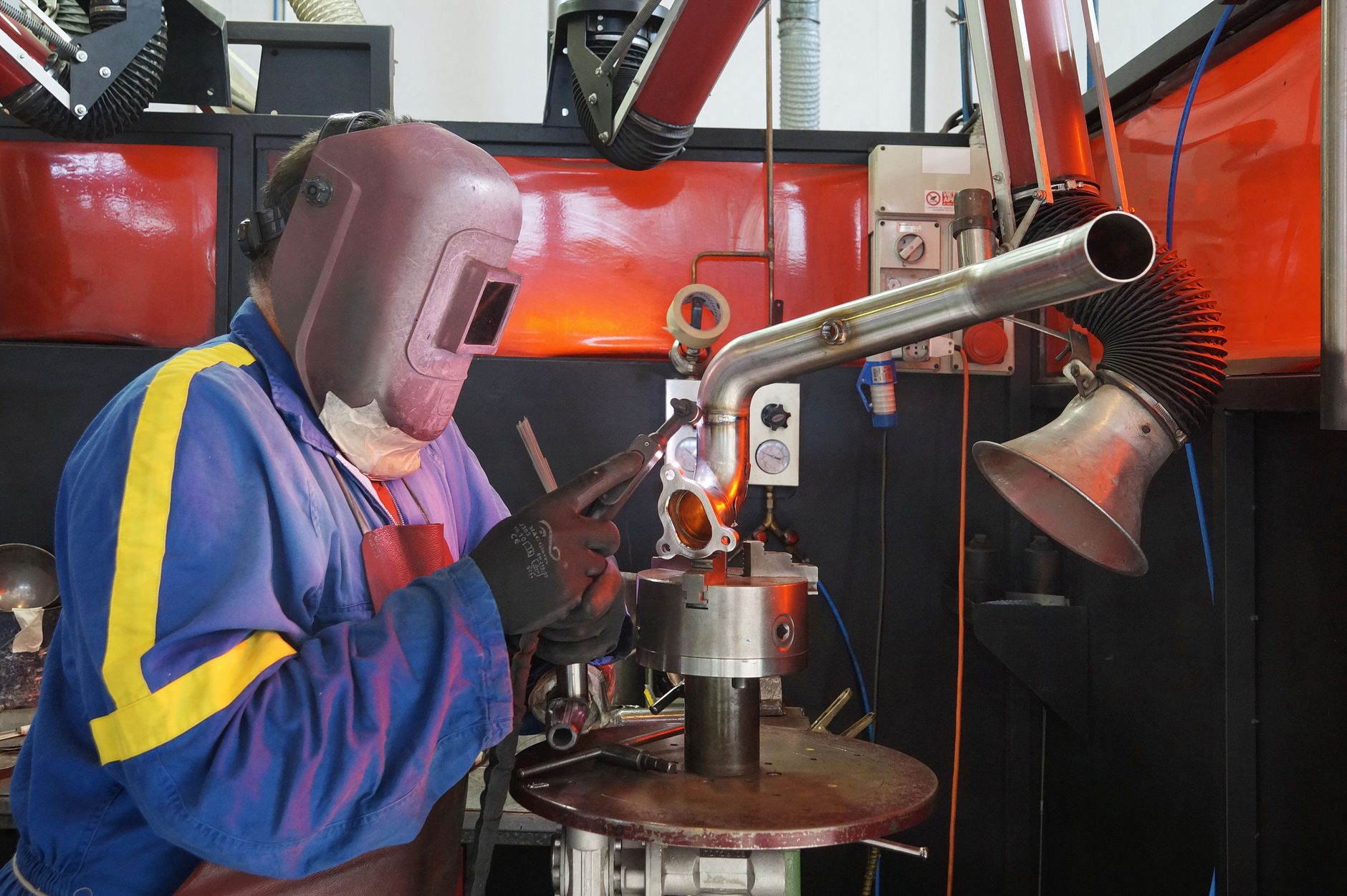
Both brands offer consumer-targeted, portable MIG machines aimed at hobbyists and small shops. Review sites and comparisons frame models like the Hobart Handler family and Millermatic 211 as overlapping options for garage projects. They handle wire-feed MIG processes and, depending on model and accessories, can run flux-cored wire or gas-shielded MIG.
Common practical traits meaningful to hobbyists:
- Designed for entry-to-mid-level users: marketed and reviewed as suitable for home garages and light shop work.
- Models exist that accept household power or higher-voltage input; specific multi-voltage model names appear in reviews.
- Both ecosystems have aftermarket parts, user communities, and forum discussion that help troubleshoot setup and accessories.
Price & value
Reviewers consistently report Hobart machines tend to cost less than comparable Miller units. Multiple comparison pages summarize the core tradeoff: Hobart often delivers much of the same capability at a lower price, while Miller emphasizes additional convenience and refined features. That pattern shows up across the cited reviews.
What this means for you: if budget is the dominant constraint, Hobart models are frequently the more economical way to cover typical DIY steel work. If you prioritize ease-of-use features and accept a higher purchase price, Miller models aim to deliver that experience.
Features and user experience (Auto-Set, controls, spool gun support)
Reviews note Miller’s Auto-Set and user-oriented controls as differentiators; these features simplify setup and speed selection of parameters for common materials and wire sizes. Miller is also described as having more integrated support for aluminum welding through compatible spool gun solutions, according to published comparisons.
What this means for you: beginners or intermittent users who want quicker, simpler setup will likely appreciate Miller’s Auto-Set-type conveniences. If you already know basic settings or prefer manual control to save cost, Hobart’s simpler interface may be acceptable.
Portability & voltage flexibility (MVP and multi-voltage models)
The Hobart Handler 210 MVP is specifically positioned as a multi-voltage model with a swap-in plug system that supports 110V and 220V inputs, a point noted in product comparisons. Millermatic 211 is described by reviewers as a portable, multi-voltage-capable machine as well, with a focus on easy use in different power environments.
What this means for you: if you plan to move the welder between locations with different power availability, looking at multi-voltage models matters. The MVP naming on Hobart models signals a plug-based multi-voltage approach; Miller’s 211 is also presented as a portable multi-voltage option in reviews.
Aluminum capability and accessory ecosystem
Both brands can be used for aluminum welding when paired with a spool gun or appropriate feeder setup. Reviews indicate Miller often ships or supports more integrated options for aluminum work out of the box, while Hobart requires dedicated accessories to achieve equivalent aluminum performance.
What this means for you: if you plan regular aluminum work, check accessory availability and the recommended spool gun workflow for each model. Miller’s positioning in reviews favors plug-and-play convenience for aluminum, which reduces setup friction for hobbyists focused on that material.
Build, service, and user community feedback
Community threads and forums reveal variability in real-world impressions: some users favor Miller for perceived arc characteristics and convenience; others prefer Hobart for simplicity and cost-effectiveness. Review sites echo this split: Hobart praised for straightforward, robust operation; Miller praised for polished features and ease of setup.
What this means for you: factor in the availability of local service, replacement parts, and community knowledge. If you want a machine that a wide set of hobbyists discuss and repair in forums, both brands show active communities; the choice depends on whether you prioritize simplicity or factory features.
Side-by-side spec summary (table)
| Characteristic | Hobart (Handler family / 210 MVP) | Miller (Millermatic 211) |
|---|---|---|
| Typical intended user | Budget-conscious hobbyists and light shops. | Hobbyists who value convenience, smoother setup, and aluminum support. |
| Input voltages | Multi-voltage plug noted for 210 MVP (110/220). | Multi-voltage portable capability described in reviews of the 211. |
| Auto-Set / simplified controls | — | Auto-Set type features noted by reviewers. |
| Aluminum support (spool gun) | Supported with accessories; requires spool gun. | Often presented with more integrated options for aluminum via spool gun. |
| Portability / weight | — (no consistent public figure cited in sources used) | — (no consistent public figure cited in sources used) |
| Duty cycle | — | — |
| Price signal | Lower-cost positioning in reviews. | Higher-priced relative to comparable Hobart models, per reviews. |
| Pros / Cons (summary) | Simple, robust, cost-effective; may need more manual setup. | Convenient features, easier setup, stronger out-of-box aluminum workflow; higher price. |
Cells marked « — » indicate no consistent public figure found in the sources used; see « What we don’t know » below.
Pros & cons recap
Hobart — pros
- Generally more affordable in reviewer comparisons.
- Praised for straightforward, robust operation by community discussions.
Hobart — cons
- Fewer convenience features out of the box compared with Millermatic models described in reviews.
- Aluminum work typically requires additional accessories like a spool gun.
Miller — pros
- Reviewer-facing conveniences such as Auto-Set and refined controls reduce setup time.
- Described as better-integrated for aluminum with compatible spool-gun support.
Miller — cons
- Typically carries a higher price tag in comparisons.
- Some users still prefer Hobart for simplicity and perceived robustness.
Verdict by use-case
- Best pick for a budget-minded hobbyist who mainly welds mild steel and wants a straightforward setup: Hobart, because reviewers emphasize cost-effectiveness and reliable, simple operation.
- Best pick for a hobbyist who values convenience, faster setup, and plans to weld aluminum sometimes: Miller, due to Auto-Set-style features and more integrated aluminum accessory support in reviews.
- Best pick for mobile or occasional use where household power is the only option: consider the multi-voltage models noted in reviews (Hobart 210 MVP and Millermatic 211 are both presented as multi-voltage-capable); select based on how much you value simpler controls versus lower purchase cost.
No absolute winner: choose by the projects you plan, your power availability, and how much you value convenience versus purchase price.
Quick buying checklist
- Confirm power availability: 120V vs 240V or multi-voltage requirement.
- Decide whether aluminum welding is likely; if yes, check spool gun compatibility.
- Weigh budget vs convenience: Hobart for lower cost, Miller for feature convenience.
- Check local service and parts availability and read community threads for real-world notes.
Further reading & internal links
- Choosing your first welder
- MIG welding basics
- Safety and PPE
- Spool guns & aluminum welding
What we don’t know
The brief and sources used do not provide consistent, up-to-date public figures for weights, specific duty-cycle percentages across models, or current retail MSRPs. Where those numeric specs are required for a purchase comparison, consult the manufacturer spec sheets or retailer listings directly. Manufacturer PDFs and model pages are the appropriate place to confirm numeric specs for a specific production year or SKU.
Sources & last-checked date
- « Miller vs Hobart Welders: Which Is Best? » — Welding Ranked. https://weldingranked.com/articles/miller-vs-hobart/ — consulted 04/09/2026.
- « Hobart vs. Miller MIG Welders (2025): Same Family, Different Price Tags » — Welders Supply. https://welders-supply.com/welding-equipment/mig-welders/hobart-vs-miller-mig-welders/ — consulted 04/09/2026.
- « Hobart 210 MVP vs Miller 211 – Detailed Comparison » — WeldGuru. https://weldguru.com/hobart-210-vs-miller-211/ — consulted 04/09/2026.
- « Hobart Handler 140 Welding Guide (spec sheet PDF) » — HobartWelders.com. https://www.hobartwelders.com/-/media/hobart/import/specsheets/file/handler-140-217919.pdf — consulted 04/09/2026.
- « Hobart 210 vs Miller 211 Comparison (Fall 2026) » — WeldZone. https://weldzone.org/hobart-210-vs-miller-211/ — consulted 04/09/2026.
- Community discussion: « Millermatic 211 or a Hobart 210 » — WeldTalk / Hobart welders forum. https://weldtalk.hobartwelders.com/forum/equipment-talk/mig-wire-welders/40479-millermatic-211-or-a-hobart-210 — consulted 04/09/2026.
- Community discussion: « Who has used both the Miller 211 and Hobart 210MVP? » — Grassroots Motorsports forum. https://grassrootsmotorsports.com/forum/grm/who-has-used-both-the-miller-211-and-hobart-210mvp/178556/page1/ — consulted 04/09/2026.

Rédactrice · travaux, rénovation, matériaux
Élodie se concentre sur les techniques de rénovation et l'utilisation des matériaux innovants. Elle s'assure de la véracité des contenus en se basant sur des études et des témoignages d'experts avant publication.
Dans Outils et Consommables
16 septembre 2026
New Plasma Power Source: A Game Changer for Home Metal Fabrication
15 septembre 2026
Features of the Grizzly Horizontal Miter-Cutting Band Saw

15 septembre 2026