Accueil Outils et Consommables
Outils et Consommables
Soudeuse onduleur portable : caractéristiques clés pour chantier
Guide pratique des caractéristiques importantes d'une soudeuse onduleur portable pour préfabrication et interventions sur site : mobilité, multi‑processus, et c
Élodie Barbier 8 min de lecture
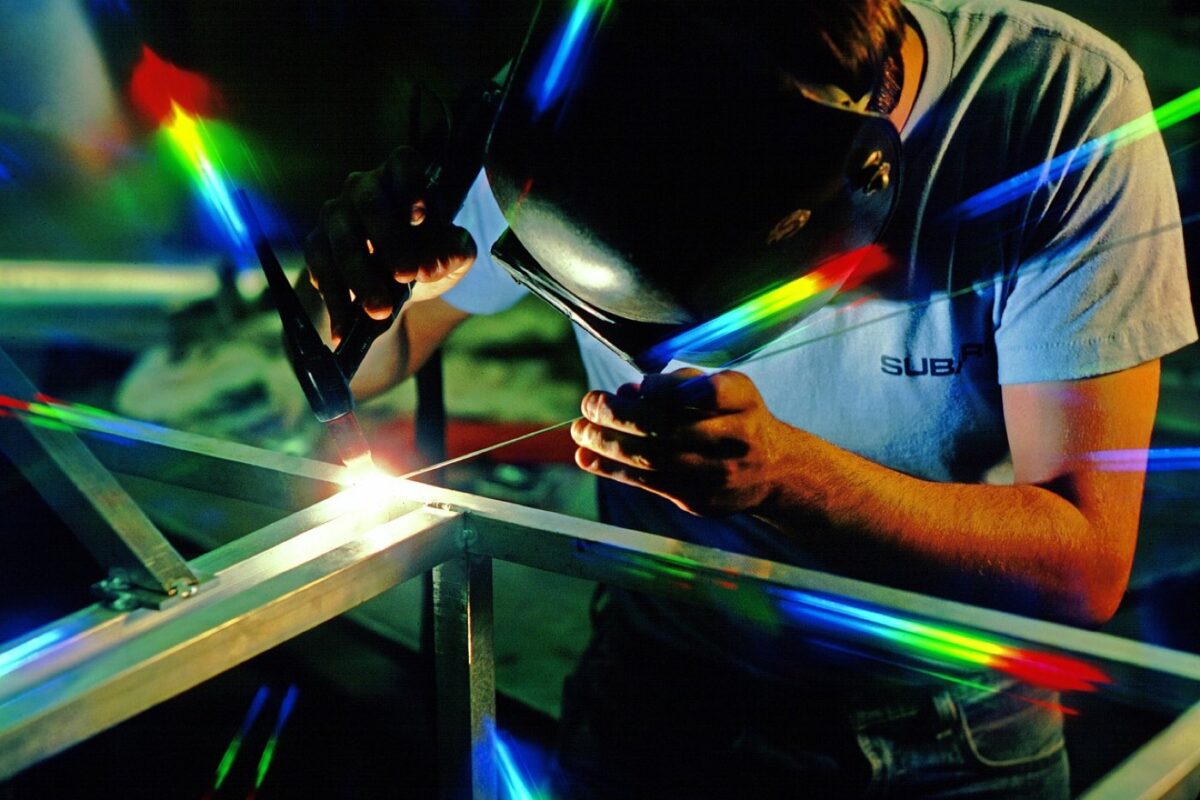
This guide explains which features of a portable inverter welder matter for field prefabrication and on‑site work, why each feature matters, and how to prioritize them by use case. It draws on manufacturer guides and buyer resources cited below to help form practical equipment requirements for mobile welding tasks.
Context: why choose a portable inverter for prefabrication and on‑site work
Field prefabrication and site repairs require mobility and flexibility. Tasks include quick repairs, assembling semi‑finished components, and interventions where fixed power is not guaranteed. Mobility reduces time lost moving parts back to shop floors and allows prefabrication to occur closer to final installation, saving handling and fit‑up time (MillerWelds).
An inverter-based portable machine tends to offer compact size and process flexibility compared with older transformer units. Multi‑process inverters let a single unit cover MIG, flux‑cored, stick and sometimes TIG, which lowers the number of machines that must be transported to a site (WeldingRanked).
For mobile use, design choices that prioritize weight, handle/harness options, and ease of setup directly affect productivity. The ability to switch between 120 V (domestic) and 240 V feeds widens the number of job locations where the machine can be used without additional equipment (MillerWelds; WeldingRanked).
Technical characteristics that count and why
Each of the following characteristics has a practical impact on field performance. The explanation below links the technical point to on‑site consequences and notes where to consult manufacturer specs for numeric values.
Dual‑voltage capability
Dual‑voltage units accept both lower household voltages and higher site voltages, which increases deployment options. On jobs with only a household outlet available, a 120 V mode can allow limited welding. When a 240 V supply is available, higher output and duty cycles become possible. Check the machine manual or product sheet for supported voltages before assuming compatibility (WeldingRanked; MillerWelds).
Duty cycle
Duty cycle indicates how long a welder can run at a given current before requiring a cooling interval. For field teams, duty cycle affects how often welding must pause and whether a machine can sustain longer beads or repetitive production. Read the technical fiche to match duty cycle at required amperage to the expected cordon lengths on site rather than relying on generic advertising (HomeWelder).
Output range and usable amperage
Maximum amperage and the useful output range determine what material thicknesses and joint types can be welded. Thin sheets need lower, controllable output; structural sections require higher current and stable arcs. Manufacturer documentation and application charts should guide the selection of an amperage range, rather than assuming a single rating covers all needs (HomeWelder; Fronius).
Generator compatibility and power quality tolerance
Field sites often rely on portable generators. Inverter sensitivity to waveform and voltage fluctuation varies. Machines with power factor correction (PFC) or explicit generator compatibility handle unstable supplies better. Verify the machine’s stated generator compatibility and any required generator type (for example, pure sine wave) before operation on generator power (WeldingRanked; Fronius).
Multi‑process capability
Portable multiprocess inverters let crews perform gasless flux‑cored MIG outdoors, stick welding on dirty or rusty stock, and TIG where finish matters. Flux‑cored (FCAW) increases productivity outdoors by removing the need for shielding gas; stick (SMAW) tolerates contaminants and is simple to deploy. Select processes based on the typical on‑site conditions described in the job list (WeldingRanked; Compel).
IP rating and environmental robustness
IP ratings indicate protection against dust and water ingress. Ratings such as IP21S or IP23S are used in manuals to characterize suitability for outdoor use and exposure to splashes. When a project includes damp or dusty environments, consult the product manual for the exact IP classification and corresponding constraints (SEALEY manual; Magmaweld).
Weight, ergonomics and transportability
Actual portability is a combination of unit weight, handle or harness design, and chassis layout for straps or carts. A lighter unit with an ergonomic handle reduces fatigue on frequent moves; a multi‑process inverter avoids carrying several machines. Check physical dimensions and transport features in the product sheet to confirm field suitability (WeldingRanked).
Accessories and consumables logistics
Field work increases the value of spare torches, contact tips, drive rolls and flux‑cored wire spools on site. Consider availability of spare parts, torch lengths, and consumable types when specifying equipment for a fleet. Manuals and parts lists detail these items and their part numbers (WeldingRanked).
Ergonomic controls and protective functions
User interfaces that are clear and quick to set reduce setup time. Built‑in protections such as voltage‑reduction devices (VRD), thermal overload protection and clear fault indications help maintain uptime and safety in variable site conditions. Refer to the manufacturer documentation for the exact protections offered (Fronius; Westerman).
Engine‑driven (welder‑generator) option
For sites without reliable electrical supply, engine‑driven welders provide both welding power and auxiliary power for tools. The trade‑offs include added weight, fuel logistics and noise. Manufacturer guides describe the performance and operational considerations for engine‑driven units (DenohGroup; MillerWelds).
Case studies: prioritizing features for three common field profiles
Profiles below explain which characteristics to prioritize based on typical tasks. Use these profiles to build requirement lists for procurement or fleet specifications.
Profile A — small repairs and rapid intervention
Tasks: short‑duration repairs, on‑the‑spot fixes, quick assemblies. Priorities: low weight and simple setup, stick and flux‑cored capability, ease of transport, and minimal accessory needs. Dual‑voltage can be helpful where only household outlets are available. Emphasize machines with simple controls and robust consumables supply chains (WeldingRanked; Compel).
Profile B — light prefabrication and on‑site assembly
Tasks: repeated small welds, assembly of semi‑finished parts, moderate bead lengths. Priorities: a reasonable duty cycle for repeated work, flux‑cored MIG or multiprocess capability for productivity without gas, and generator compatibility. Verify duty cycle values and generator tolerances on the technical fiche when sizing equipment for sustained tasks (WeldingRanked; Fronius).
Profile C — structural work and extended on‑site production
Tasks: longer continuous welds, thicker sections, multiple crews. Priorities: high duty cycle at needed amperage, engine‑driven or robust generator supply, cooling and serviceability, and water‑cooled options where specified by manufacturers. Consult engine‑driven guides and manufacturer specs for operational trade‑offs and cooling requirements (DenohGroup; Fronius).
Power on site: generator, battery, or mains?
Generator: common choice for remote sites. Verify generator power capacity, waveform quality, and whether the welder requires a pure sine output. Check welder documentation for generator compatibility and any recommended generator sizing (WeldingRanked; Fronius).
Batteries/inverters: attractive for low‑noise or emission‑restricted sites but require significant inverter and battery capacity for high‑demand processes. For MIG/TIG, stable high wattage and clean sine output are often necessary; consult power inverter guidance and manufacturer recommendations before relying on battery solutions (powerinverters.com).
Mains: when available, mains supply typically offers the cleanest power. Dual‑voltage units let crews use both mains and generator options depending on site conditions. Always compare the site’s available supply with the manufacturer’s stated input requirements.
Checklist before leaving for a job
- Confirm welder voltage compatibility with expected site supply and generator type.
- Bring spare consumables and spare torches matched to the chosen process.
- Verify IP rating against site weather and dust exposure using the product manual.
- Inspect cable and connector condition; pack spare leads if available.
- Ensure appropriate PPE and tools for clamp, ground and fit‑up operations.
- Carry documentation: product manual and parts list for on‑site reference.
Maintenance and longevity in mobile use
Regular cleaning of cooling vents, inspection of fans and periodic verification of cable integrity prolong field service life. Refer to the manufacturer manual for scheduled checks and recommended service intervals. Local after‑sales support or authorized service centers are useful for maintaining uptime on long projects (Fronius; SEALEY manual).
Material considerations: steel, stainless, and aluminum
Process choice depends on material and finish requirements. TIG is often preferred for aluminum and high‑finish stainless work, while flux‑cored and stick are practical for outdoor carbon steel where finish is secondary. For aluminum, confirm whether the welder supports AC or DC as required by the chosen process and check manufacturer specifications for AC capabilities where noted (Westerman; Fronius).
Resources and where to find manufacturer specifications
Always consult the product technical fiche and user manual for numeric values such as duty cycle at specified amperage, generator compatibility statements, IP ratings, weight and accessory compatibility. The sources used for this guide are listed below with consultation dates; use them to locate original manuals and specification pages for the models under consideration.
Limitations — what this guide does not provide
The guide does not list specific model recommendations or prices. Precise numeric ratings (duty cycles, amperages, weights, power draws) must be taken from manufacturer product sheets or manuals; no new numeric values are invented here. This page informs requirements and priorities only and does not replace formal product datasheets, hands‑on testing, or certified training.
Sources
- MillerWelds — Tips for Setting Up a Mobile Welding Rig and Choosing Equipment for Field Fabrication. https://www.millerwelds.com/en-US/resources/knowledge-hub/field-welding/mobile-fabrication-and-mro/tips-for-setting-up-a-mobile-welding-rig-and-choosing-equipment-for-field-fabrication (consulted 04/09/2026)
- WeldingRanked — Best Portable Welding Machines (2026). https://www.weldingranked.com/articles/best-portable-welding-machines/ (consulted 04/09/2026)
- The Welder’s Guide — Best Portable Welders for Field Work and On‑Site Repairs. https://theweldersguide.com/articles/best-portable-welders-for-field-work/ (consulted 04/09/2026)
- HomeWelder — How to Choose a Welder: The Numbers That Matter. https://homewelder.com/how-to-choose-a-welder/ (consulted 04/09/2026)
- Fronius — How to Choose a Portable Welding Machine: The 3‑Year Cost Test. https://www.froniuswelder.com/blog/how-to-choose-a-portable-welding-machine-the-3year-cost-test-69.html (consulted 04/09/2026)
- DenohGroup — Engine Driven Welder: The Complete Technical Guide. https://www.denohgroup.com/engine-driven-welder-the-complete-technical-guide-to-selection-performance-and-field-application/ (consulted 04/09/2026)
- Compel — Inverter Welder Guide: MIG, TIG & Stick. https://www.compelgroup.co.uk/blog/inverter-welder-guide (consulted 04/09/2026)
- SEALEY manual — example IP rating discussion. https://manuals.plus/sealey/powermig500ipowermig500wi-professional-gas-gasless-mig-inverter-welder (consulted 04/09/2026)
- Magmaweld — portable inverter catalog (IP rating example). https://www.magmaweld.com.tr/Content/UserFiles/Katalog/km_eng_092018.pdf (consulted 04/09/2026)
- powerinverters.com — Power inverter considerations for welders. https://canada.powerinverters.com/power-inverter-for-welder (consulted 04/09/2026)

Rédactrice · travaux, rénovation, matériaux
Élodie se concentre sur les techniques de rénovation et l'utilisation des matériaux innovants. Elle s'assure de la véracité des contenus en se basant sur des études et des témoignages d'experts avant publication.
Dans Outils et Consommables
16 septembre 2026
New Plasma Power Source: A Game Changer for Home Metal Fabrication
15 septembre 2026
Features of the Grizzly Horizontal Miter-Cutting Band Saw
15 septembre 2026