Accueil Outils et Consommables
Outils et Consommables
MIG vs flux-cored pour réparations extérieures
Comparaison pour choisir entre MIG (GMAW) et flux‑cored (FCAW) en extérieur selon le vent, l’état des surfaces, le débit de dépôt et l’épaisseur des tôles. FCAW
Gabriel Chevalier 9 min de lecture
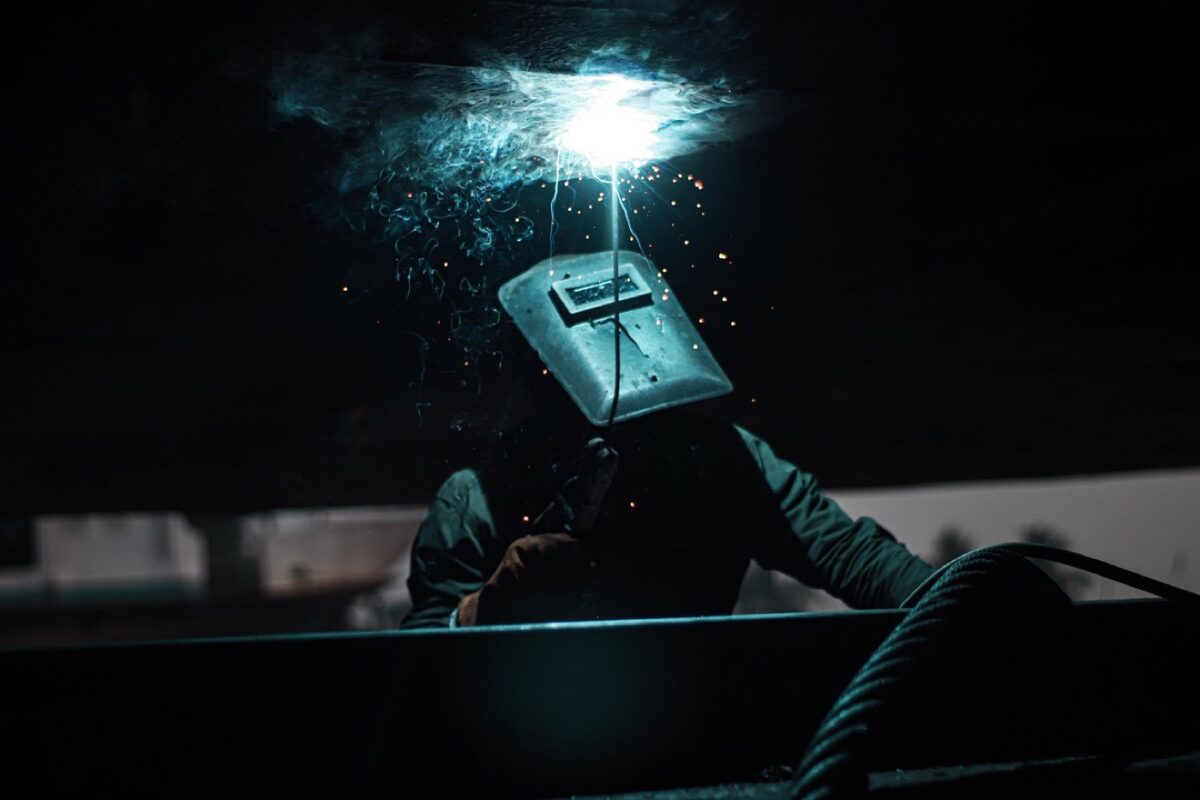
This comparison focuses on choosing between MIG (GMAW, solid wire) and flux‑cored arc welding (FCAW — gas‑shielded and self‑shielded) for outdoor repairs where wind, dirty surfaces, required deposit rate, and plate thickness affect the decision.
Quick comparison table

| Criterion | MIG (GMAW) — solid wire | FCAW‑G — flux‑cored, gas‑shielded | FCAW‑S — flux‑cored, self‑shielded |
|---|---|---|---|
| Adaptation to wind | Sensitive to wind because external shielding gas can be dispersed, increasing porosity risk. | Better than MIG in controlled conditions but still uses external gas; wind can affect shielding. | Designed for field work; does not rely on external shielding gas and is less affected by wind. |
| Need for shielding gas | Requires external shielding gas for the solid wire process. | Requires external shielding gas in addition to flux core. | Does not require external shielding gas; flux provides protection. |
| Tolerance to dirty/rusty surfaces | Less tolerant; performs best on clean material in an enclosed shop. | More tolerant than MIG but generally used in controlled settings for better properties. | More tolerant of rust, mill scale, and dirty surfaces; suited for field repairs. |
| Deposition rate / productivity | Good for thin material and production work with controlled conditions. | Higher deposition rates than MIG; chosen where higher weld metal deposition is needed. | High deposition and suited to heavy buildup and repairs on thicker sections in the field. |
| Finish / cord appearance | Cleaner appearance and less spatter in controlled shop conditions. | Typically cleaner than self‑shielded FCAW; used when cord quality and mechanical properties matter. | Tends to produce more spatter and can require slag removal; finish is rougher than MIG in many cases. |
| Post‑weld cleaning (slag) | Minimal slag for typical GMAW solid‑wire processes. | Some slag can occur depending on wire type; generally requires less slag cleanup than self‑shielded options used in the field. | Often produces slag that must be removed; slag removal is part of field workflows. |
| Equipment footprint | Power source plus gas cylinder and regulator; sensitive setup for outdoor shielding. | Similar to MIG but with flux‑cored wire; still requires gas handling when gas‑shielded. | Simpler gas setup since no external gas is required; spool and power source are primary equipment. |
| Recommended use | Shop work, thin plate, applications where finish and low spatter matter. | Workshop applications where higher deposit and improved mechanical properties are required. | Field work, windy environments, repairs on dirty or rusty parts where mobility and robustness are priorities. |
| Porosity control | Porosity risk increases outdoors due to gas dispersion; control relies on shielding integrity. | Better porosity control than self‑shielded when gas protection is maintained. | Less vulnerable to wind‑blown gas loss but can still suffer porosity if technique or surface condition is poor. |
| Consumable cost implication | Consumables and gas are standard for shop MIG; cost varies by practice and supplier. | Consumable cost includes flux‑cored wire plus shielding gas; chosen when properties justify the cost. | Consumable cost reflects flux‑cored wire designed for field use; chosen for productivity and reduced gas handling. |
Table attributions: statements above are drawn from Miller, AWS, Linde, WeldIndex, Welders Supply and Hobart technical guidance consulted 04/09/2026.
How wind and outdoor conditions shape the choice
The primary outdoor challenge is loss or disruption of shielding effectiveness. External shielding gas used by solid‑wire MIG can be dispersed by wind, which raises the risk of porosity and other defects. Multiple manufacturer and technical sources note that shielding gas dispersion is a core problem for MIG outdoors.
Flux‑cored self‑shielded wires avoid the need for external gas and therefore remove the wind‑blown gas failure mode cited in field‑work guidance. Technical overviews and manufacturer advice highlight the self‑shielded FCAW variant as the practical alternative when wind cannot be controlled.
Alternatives for using MIG outdoors include building temporary enclosures, wind breaks, or moving the work into a sheltered area. Technical troubleshooting sheets for GMAW advise protecting the weld area or using controlled atmospheres when finish and porosity control are critical.
MIG (GMAW solid wire): process details and field considerations
MIG uses a continuous solid electrode and an external shielding gas to protect the arc and molten pool. The process is described in welding references and manufacturer guides as suited to shop environments where gas can be maintained and material is clean.
Advantages for repair work include good control on thinner materials and a cleaner bead in controlled conditions. Manufacturers recommend MIG when finish, low spatter, and precise heat input are priorities.
Limitations outdoors stem from dependence on shielding gas. Technical documents warn that wind and contaminated surfaces increase porosity risk and call for protective measures when MIG is used in the field. If MIG must be used outside, the guidance is to shield the work area or wait for calmer conditions where possible.
Typical applications for MIG include shop repairs, thin‑gauge bodywork, and production where setup and gas control are reliable.
Flux‑cored welding (FCAW): FCAW‑G vs FCAW‑S and what that means on site
FCAW covers two main families: gas‑shielded flux‑cored (FCAW‑G) and self‑shielded flux‑cored (FCAW‑S). Technical and industry overviews define the distinction by the presence or absence of external shielding gas in addition to the flux inside the wire.
FCAW‑G offers weld properties and cord cleanliness closer to workshop expectations when gas protection is applied. Sources discuss FCAW‑G in the context of achieving mechanical properties and better cord quality in controlled settings.
FCAW‑S is characterized in manufacturer and supplier guidance as the field‑oriented choice: it tolerates wind and dirty surfaces because the flux provides local shielding. That tolerance makes FCAW‑S a frequent recommendation for outdoor repairs and mobile work.
Drawbacks of flux‑cored processes noted in technical resources include increased spatter, slag that requires removal for some wire types, and a finish that can be rougher than MIG in ideal shop conditions. Sources also caution that technique and surface preparation still matter: self‑shielded wire reduces some environmental failure modes but does not eliminate porosity risk if technique or surface condition is poor.
For structural projects, references remind the reader to confirm procedure qualification and compliance with applicable welding codes before accepting FCAW as the process for critical welds.
Practical decision checklist for the jobsite
- Weather and wind: if wind control is not possible, favor processes not relying on external gas.
- Surface condition: for dirty or rusty material on the site, flux‑cored variants tolerate contaminants better than MIG in general guidance.
- Required finish: when appearance and low spatter are critical and a sheltered environment is available, MIG is preferred.
- Productivity and deposition needs: where higher deposition or buildup is required, flux‑cored wires are commonly chosen.
- Mobility and equipment constraints: self‑shielded FCAW reduces gas handling on mobile repair rigs.
- Project code and qualification: for structural work, verify PQR/WPS and applicable code compliance before selecting a process (AWS guidance).
Equipment and safety notes for field welding
Field work requires attention to ventilation, fume control, and protection from spatter. Manufacturer guidance and supplier discussions note that flux‑cored processes can produce more fumes and slag that must be managed on site.
For MIG, gas handling adds equipment and a control point that is sensitive to leaks and wind. For FCAW‑S, the emphasis shifts to slag removal and fume management. Consult MSDS and manufacturer technical bulletins for specific consumable safety data and recommended PPE.
MIG (GMAW) — for whom
For shops, thin material, and jobs where finish matters. Advantages: cleaner bead, low spatter in controlled setups. Limitations: sensitive to wind and surface contamination; requires shielding gas.
FCAW‑G — for whom
For workshop jobs needing higher deposition with improved cord properties. Advantages: good mechanical properties when gas shielding is applied. Limitations: still requires gas handling and controlled conditions for optimal results.
FCAW‑S — for whom
For field repairs, mobile maintenance, and windy or dirty environments. Advantages: no external gas, tolerance to wind and contamination, high deposition. Limitations: more spatter, slag removal, and finish cleanup. Technique remains important to avoid defects.
Which process for which user profile
- Bricoleur / farmer / scrap‑metal repair: FCAW‑S is often the practical choice for outdoor, dirty conditions because it does not depend on external gas; however, if a clean, sheltered area is available and finish is important, MIG remains preferable.
- Mobile repair / field technician: FCAW‑S is commonly recommended for on‑site repair work where mobility and wind resilience matter; consider FCAW‑G or MIG if the site can be enclosed and higher cord quality is required.
- Production shop / body shop: MIG (GMAW) is favored for thin materials and where control over finish and low spatter is necessary; FCAW‑G is an option when higher deposition and mechanical properties are the priority in controlled settings.
When to verify codes and procedures
For structural or safety‑critical welds, check AWS D1.1 and project specifications and ensure that the chosen procedure has the necessary qualification and PQR. Do not assume a single process is acceptable for all cases; verify procedure/spec for each critical application.
What this comparison does not establish
- This comparison does not provide amperage, travel speed, wire feed settings, or other numeric parameters that are not present in the cited sources.
- This comparison does not claim that any process never produces porosity or defects; sources describe tendencies and conditions that influence outcomes.
- This comparison does not assert universal code compliance for any process without a project‑specific procedure qualification record.
- This comparison does not present pricing, brand‑specific performance numbers, or consumable costs that are not documented in the listed sources.
Resources & readings (consulted 04/09/2026)
- Miller — Flux‑cored welding: the basics for mild steel. https://www.millerwelds.com/en-US/resources/knowledge-hub/mig-welding/how-to/flux-cored-welding-the-basics-for-mild-steel — consult 04/09/2026.
- Miller — Solid Wire Versus Flux‑Cored Wire: When to Use Them and Why. https://prod.millerwelds.com/en-us/resources/knowledge-hub/mig-welding/how-to/solid-wire-versus-flux-cored-wire-when-to-use-them-and-why — consult 04/09/2026.
- AWS — Welding Digest: Flux‑Cored Arc Welding. https://www.aws.org/magazines-and-media/welding-digest/2025/december/wd-dec-2025–flux-cored-arc-welding–principles-applications-and-common-challenges/ — consult 04/09/2026.
- Linde — Flux‑cored arc welding overview. https://www.linde-gas.com/processes/welding/fcaw — consult 04/09/2026.
- Welders Supply — Flux‑Core Welding Outdoors. https://www.welders-supply.com/welding-processes/flux-cored-welding/flux-core-outdoor-welding/ — consult 04/09/2026.
- WeldIndex — Flux‑Cored Arc Welding guide. https://weldindex.com/guides/flux-cored-welding-guide — consult 04/09/2026.
- ToolAdvisorPro — MIG vs Flux Core Welding. https://tooladvisorpro.com/shop-tools/mig-vs-flux-core-welding/ — consult 04/09/2026.
- Wikipedia — Gas metal arc welding (MIG). https://en.wikipedia.org/wiki/Gas_metal_arc_welding — consult 04/09/2026.
- Hobart Brothers — GMAW Troubleshooting (technical doc). https://www.hobartbrothers.com/wp-content/uploads/2022/03/GMAW-Troubleshooting-Web.pdf — consult 04/09/2026.
- TWI — What is FCAW? https://www.twi-global.com/technical-knowledge/faqs/flux-cored-arc-welding-fcaw — consult 04/09/2026.
- Lincoln Electric — MIG & Flux‑Cored content. https://ch-delivery.lincolnelectric.com/api/public/content/e2ee3f8954064e8380e90a56a92d413c?v=ebb667c6 — consult 04/09/2026.
Editorial disclaimer: this comparison informs; for structural or safety‑critical work, verify applicable procedures, qualifications, and project specifications before selecting a welding process.

Rédacteur spécialisé · soudure, métallerie, bricolage
Gabriel couvre l'univers de la soudure et de la métallerie, partageant des conseils pratiques et des méthodes efficaces. Il vérifie chaque information à l'aide de sources fiables pour garantir la qualité de ses articles.
Dans Outils et Consommables
16 septembre 2026
New Plasma Power Source: A Game Changer for Home Metal Fabrication
15 septembre 2026
Features of the Grizzly Horizontal Miter-Cutting Band Saw
15 septembre 2026