Braze Welding: What It Is and How It Differs From Brazing
- Rubrique
- Actualité
- Auteur
 Gabriel Chevalier
- Publié le
- Lecture
- 6 min
Points à retenir
- The American Welding Society defines brazing as a process whose filler metal has a liquidus above 450°C (842°F).
- The main appeal is that the base metal does not melt.
- The usual choice is a copper-zinc rod. Airgas lists RBCuZn-C, a flux-coated, low-fuming bronze rod sold for braze welding steel, cast iron and copper.
- The steps below follow the PrimeWeld guide. Treat them as a general outline, not a qualified procedure for a critical part.
Braze welding (soudo-brasage in French) is a joining method where you heat the base metals with a torch and deposit a bronze or brass filler onto the joint, without melting the base metal. It is not true welding, because the parts never fuse. It is not classic brazing either, because the filler is laid down rather than drawn into a tight gap. It sits between the two, and it is widely used to repair cast iron.
Welding, brazing, soldering and braze welding: where the lines fall
The American Welding Society defines brazing as a process whose filler metal has a liquidus above 450°C (842°F). Below that line, it is soldering. In both cases the filler melts below the base metals. In welding, the base metal itself melts, at or above its melting point, which is more than 1,500°C for steel, according to the figures reported by the Lucas-Milhaupt and ESAB University material on the three processes.
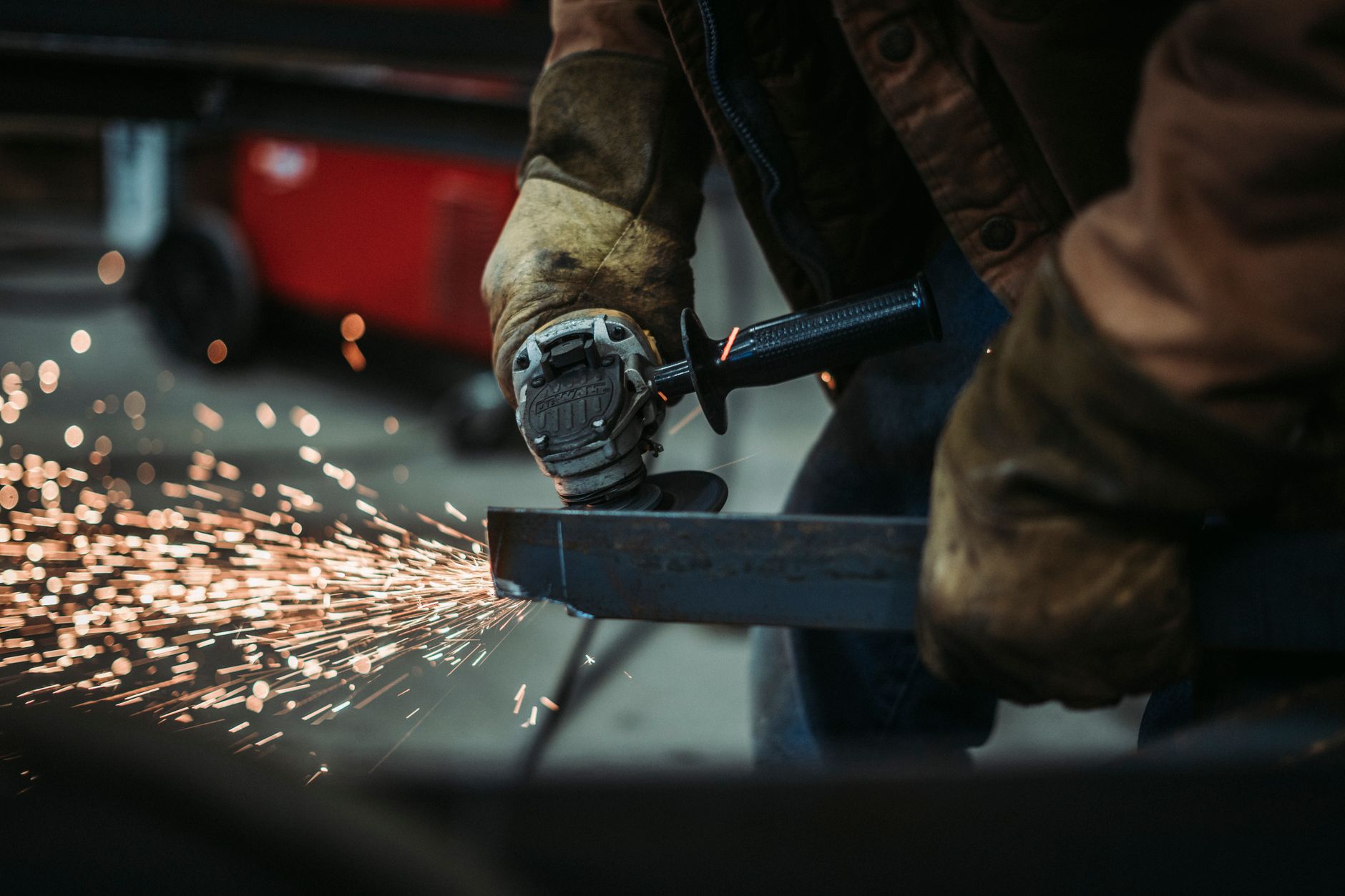
Braze welding follows the brazing temperature logic, but the way the filler travels is different. A cast iron guide from PrimeWeld and a technical FAQ from TWI both describe the same idea: the filler is deposited on the heated surface, not pulled in by capillary action. In classic brazing, the gap between parts is kept very small precisely so the molten filler is drawn in. In braze welding, you usually bevel or groove the joint and build up the filler, much as you would lay a weld bead.
If you want the broader comparison between soldering-type and welding-type joints, our piece on the differences between brazing and welding covers it from the beginning.
Why people choose braze welding
The main appeal is that the base metal does not melt. TWI explains that, because the heat-affected zone reaches a much lower maximum temperature than in fusion welding, hardened brittle structures do not form in cast iron. The process also avoids picking up impurities such as phosphorus and sulphur from the casting, which TWI notes can happen when the parent metal melts.
PrimeWeld adds a few practical advantages:
- It can join dissimilar metals, such as copper alloys to cast iron.
- Torch brazing is low cost and simple in terms of equipment.
- It avoids the embrittlement that fusion welding can cause in cast iron.
TWI also notes that the deposited braze metal is soft and generally easy to machine, which helps when a repaired surface has to be dressed flush.
The filler: bronze and brass rods
The usual choice is a copper-zinc rod. Airgas lists RBCuZn-C, a flux-coated, low-fuming bronze rod sold for braze welding steel, cast iron and copper. The supplier data reported for this rod gives a composition of about 58% copper, 41% zinc and 1% tin, with a melting range of 1595°F to 1630°F (about 870°C to 888°C). That fits the range TWI gives for brass-based alloys, with liquidus temperatures of 800 to 940°C, well below the melting point of the iron.
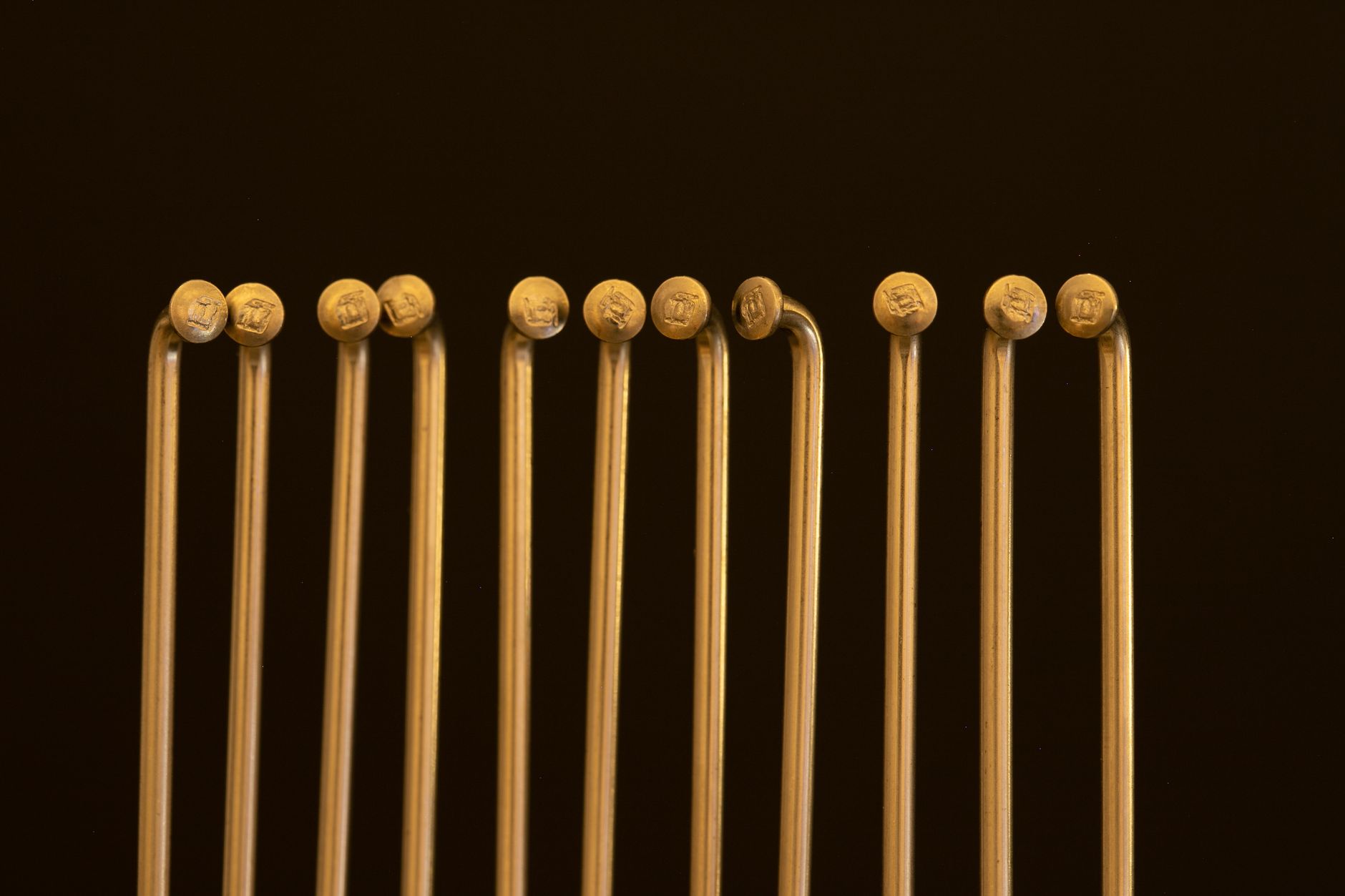
Bare rods need a separate flux. Flux-coated rods carry their own. PrimeWeld says cast iron almost always needs flux in one form or another, in paste or granular form, to keep impurities out of the joint, and that even silicon bronze rods may still need it.
A typical procedure for cast iron
The steps below follow the PrimeWeld guide. Treat them as a general outline, not a qualified procedure for a critical part. Always check the filler manufacturer’s data sheet.
1. Clean the metal
Sandblast large or oddly shaped parts. A wire brush can be enough for smaller ones. If the casting has paint, grease or oil, PrimeWeld suggests preheating to burn the contaminants off before brazing. Keep filler and flux warm and dry, because moisture can cause porosity.
2. Heat the whole casting
Heat the iron throughout, not only at the joint, to avoid stress cracking. At the joint itself, bring the iron to a nearly red-hot state. Do not overheat: the iron should absorb the filler, not melt. The guide gives no specific preheat temperature, so none is quoted here.
3. Apply flux and add filler
Add the filler only once the joint is nearly red-hot. The rule PrimeWeld repeats is that the hot cast iron should melt the filler, not the torch flame. If the filler does not flow, add more heat and stop feeding rod until the area is hot enough. Heat the area evenly so you avoid voids and filler that falls out of the joint.
4. Cool slowly
Fast cooling is how cast iron cracks. PrimeWeld lists three options: a furnace or oven that brings the temperature down gradually (it can take several hours), a torch or other heat source that keeps the whole part at a uniform temperature, or burying the part in vermiculite inside a barrel or bucket so it cools slowly.
5. Finish and inspect
Wire brush the joint and look for voids, cracks and other defects. For a smooth surface, grind the joint flush with an angle grinder and a sanding pad or Tiger disc.
Limits you should know before you start
Braze welding is a repair tool, not a substitute for a full-strength weld. TWI lists several drawbacks:
- Strength: joint strength depends on the soft braze metal or on a relatively weak bond between the braze metal and the cast iron.
- Temperature: service temperature is limited to about 260°C (500°F) with a brass filler, because the deposit softens at lower temperatures than a fusion weld would.
- Appearance: the color match with the casting is poor.
- Inspection: imperfections are harder to detect than in fusion welds, because the bond line does not have the same metallurgical continuity.
- Corrosion: galvanic corrosion can accelerate, since the deposit’s composition differs from the casting’s.
PrimeWeld adds that very uniform heating is required, that contaminants cause porosity, and that some materials, such as titanium and oxide-coated metals, are poor candidates.
Safety basics
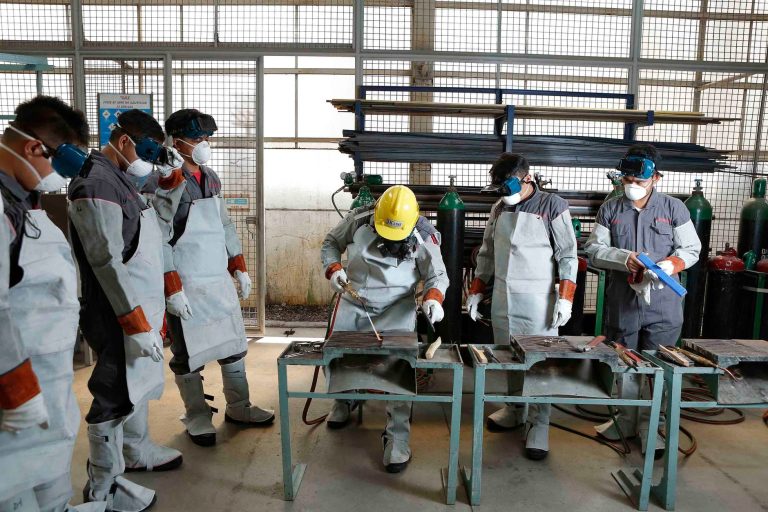
PrimeWeld recommends welding gloves, a long-sleeved shirt or jacket, sturdy work pants and safety-toe boots. For the eyes, use safety glasses, a face shield or goggles, with a shade 5 lens generally suitable for torch work. Brazing cast iron can produce fumes, so work in a well-ventilated area and follow the filler manufacturer’s recommendations on respiratory protection.
If you are new to hot work and want to start with a lower-temperature process before picking up an oxy-fuel torch, our beginner’s guide to the soldering iron is a gentler entry point. For a repair that has to carry load or sit near heat, a qualified shop is a safer call. Our Houston welding guide explains what to ask a shop and how to compare options.
When braze welding makes sense
Choose it when you need to repair a cast iron part that would crack if you melted it, such as a housing or bracket, or when you must join copper alloys to iron or steel. Choose real welding when the joint must be as strong as the parent metal or must live above roughly 260°C. When in doubt about a structural or pressure-bearing part, get a professional opinion before you light the torch.