New Welding School Opens Amid U.S. Welder Shortage
A new training academy aims to fill welding jobs as the U.S. workforce ages out, here's what it means for homeowners and contractors in Houston.
- Rubrique
- Actualité
- Auteur
 Élodie Barbier
- Publié le
- Lecture
- 3 min
A new welding training academy opening in France, reported by actu-locale.fr on 16/11/2026, is a small but telling sign of a much bigger problem playing out on both sides of the Atlantic: the world is running out of welders, and the shortage is already changing how fast metalwork projects, from garde-corps installations to custom gates, get completed.
A shortage with real numbers behind it
According to the American Welding Society (AWS), the United States needs roughly 82,500 new welders every year just to replace retirees and keep up with demand, with a cumulative shortfall projected to reach 336,000 unfilled positions. AWS data also shows that 21% of the current welding workforce is over 55, more than 157,000 experienced welders approaching retirement, while only 9.4% of welders today are under 25. For every five experienced welders who retire, trade-school groups report that only about two new welders are entering the field to replace them.

The causes cited by industry sources are consistent: two decades of college-focused guidance counseling steered young workers away from the trades, federal infrastructure spending is creating thousands of new welding jobs at the same time the existing workforce is aging out, and enrollment in some welding programs has dropped by a third in just a few years.
Why a training school abroad matters here
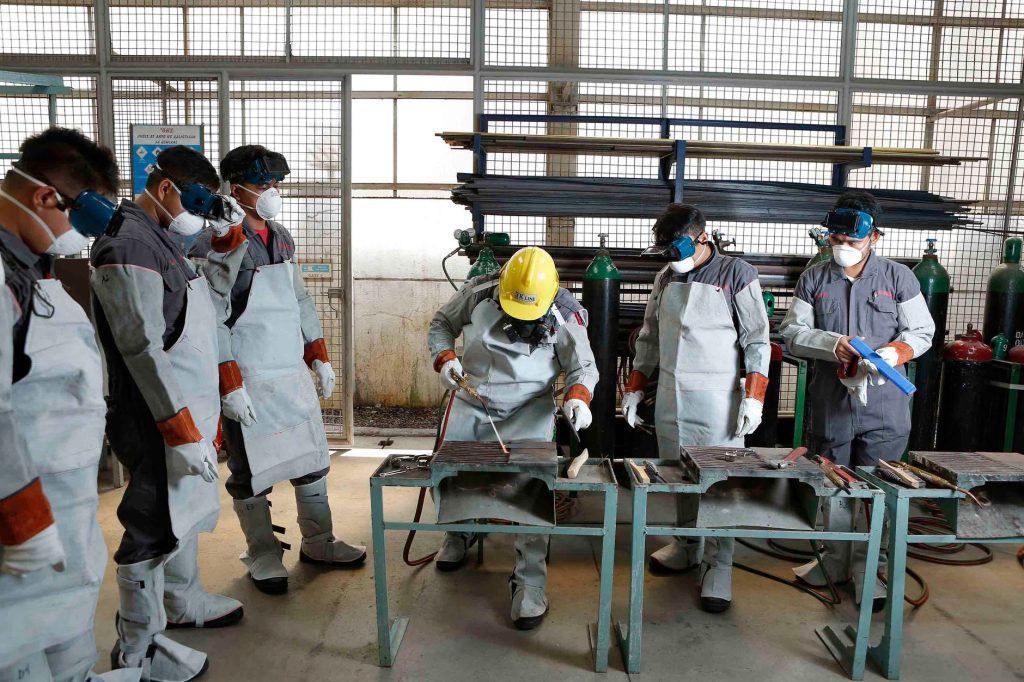
The French academy covered by actu-locale.fr is positioning itself as a direct response to the same demographic squeeze hitting American shops: an aging workforce, too few apprentices, and employers competing for a shrinking pool of certified welders. The pattern is global because the underlying economics are global, construction, shipbuilding, energy infrastructure, and custom fabrication all depend on the same narrow pipeline of skilled labor, and that pipeline has been shrinking for years almost everywhere at once.
What this means for homeowners and contractors in Houston
A tighter welder supply has concrete, practical effects for anyone planning metalwork:
- Longer lead times. Custom fabrication, gates, railings, staircases, increasingly books out weeks or months in advance as shops juggle fewer qualified hands.
- Rising labor costs. Basic economics apply: fewer welders chasing more work tends to push hourly rates and project quotes upward.
- More value in certified training. Shops that can point to certified staff, including veterans who completed welding certification programs, are becoming a selling point rather than a footnote, something worth asking about when comparing welding certification programs for veterans and their hiring impact.
- Growing interest in adjacent, less labor-intensive finishes. As welding capacity tightens, some homeowners are turning to finishing processes like thermolaquage for durable metal protection to extend the life of existing metal structures rather than replacing them outright.
Planning a metalwork project now
For anyone with a railing, gate, or staircase project on the horizon, the shortage argues for building in extra lead time and getting quotes early rather than waiting. Projects that involve safety-code elements, such as a garde-corps installed to current safety standards, are not ones to rush with an unqualified installer just to save time, especially while demand for qualified welders outpaces supply.
The bigger picture
Trade-school analysts tracking 2026 enrollment data describe the welding shortage as a present-tense operational reality, not a distant projection, one already affecting fabricators, shipbuilders, and infrastructure contractors across the country. New academies, whether in France or in Texas, are part of the industry’s response, but AWS projections suggest the gap will keep widening through at least 2029 before new training pipelines can catch up. For now, the practical takeaway for consumers is simple: skilled welding labor is becoming scarcer and more valuable, and that is already shaping timelines and prices for everyday metalwork.