Veterans Earn Welding Certificates: What It Means for Hiring

- Rubrique
- Actualité
- Matière
- Aluminium
- Auteur
 Élodie Barbier
- Publié le
- Lecture
- 4 min
Points à retenir
- The Linfodrome report doesn't name the specific program behind these 20 graduates, but it fits a model already running in several states.
- Houston's industrial base, refineries, pipeline infrastructure, shipbuilding-adjacent fabrication, and a dense residential construction market, depends heavily on a steady supply of certified welders.
- Not every veteran welding graduate moves directly into a specialty like aluminum fabrication or TIG precision work, which require additional practice beyond baseline certification.
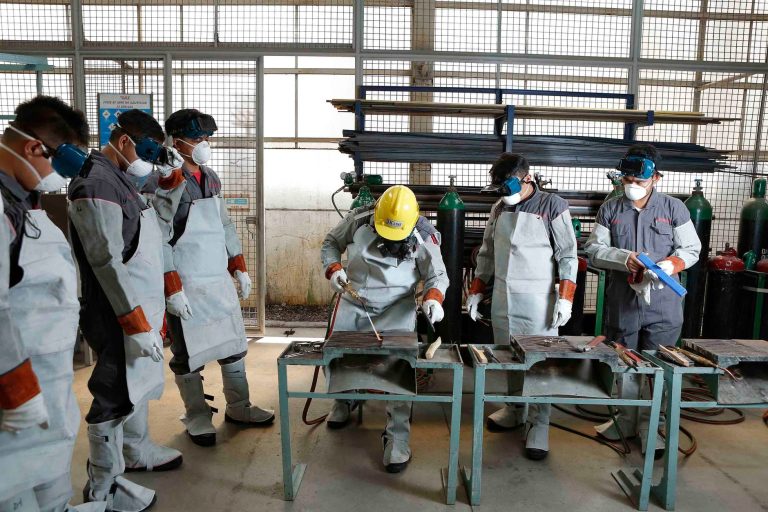
Twenty former service members recently earned their industrial welding certificates after completing a vocational retraining program, according to Linfodrome. The milestone reflects a broader, well-documented trend in the United States: structured programs that convert military experience into certified welding careers, at a moment when the trades badly need workers.
For homeowners, contractors, and hiring managers in the Houston area, this matters less as a single graduation ceremony and more as a signal. The pipeline of certified welders entering the workforce through veteran programs is growing, and it’s reshaping who shows up on job sites doing structural, pipe, and fabrication work.
A pattern repeated across the country
The Linfodrome report doesn’t name the specific program behind these 20 graduates, but it fits a model already running in several states. Workshops for Warriors, a nonprofit training center, offers a 16-week accelerated program that leads to nationally recognized welding or CNC machining credentials, funded in part through the Post-9/11 GI Bill and the Department of Defense’s SkillBridge initiative. The UA Veterans in Piping (VIP) program runs 118 days of accelerated training in welding, fire suppression, or HVAC-R, with direct placement into private-sector jobs. A separate partnership between UAW-Ford and Wounded Warriors Family Support trains veterans over six weeks to test for 6G through 4F welding certification, the credentials most commonly required for structural and pipeline welding work.

These programs share a key advantage: many veterans already have hands-on exposure to fabrication, metalwork, or maintenance from their military roles. The training compresses what would normally take a civilian student a year or more of community college coursework into a few months, because it builds on skills participants already have rather than starting from zero.
Why employers are watching this pipeline
According to estimates cited by industry groups tracking the skilled trades, around 2.1 million trades jobs, spanning welding, pipefitting, manufacturing, automotive, and HVAC, could go unfilled by 2030 in the US if current hiring and training trends continue. Welding shops, fabrication yards, and construction firms report ongoing difficulty finding workers who can pass structural certification tests, particularly for processes like MIG, TIG, and stick welding used on everything from structural steel framing to custom metalwork.
Veteran graduates entering this market typically arrive already certified to recognized standards set by the American Welding Society, which removes a major hiring bottleneck: employers don’t have to gamble on an unproven apprentice or pay for certification testing themselves. The Department of Veterans Affairs can also reimburse eligible veterans for the cost of a license or certification exam approved under the GI Bill, lowering the barrier to entry even further.
What this means for the Houston market
Houston’s industrial base, refineries, pipeline infrastructure, shipbuilding-adjacent fabrication, and a dense residential construction market, depends heavily on a steady supply of certified welders. A local or regional cohort of newly certified veterans translates into more available labor for structural fabrication, custom ironwork, and the kind of precision joinery used in projects like custom metal gates or interior metal staircases.
For homeowners planning a metalwork project, this expanding labor pool is good news on timelines, though it doesn’t change the fundamentals of choosing a contractor: ask whether the welder holds a current AWS certification relevant to the job, structural, pipe, or sheet metal, and ask which process they’ll use. Someone trained primarily on 6G pipe welding isn’t automatically the right fit for thin-gauge aluminum railing work, and the distinction matters for both durability and cost.
The certification gap still matters
Not every veteran welding graduate moves directly into a specialty like aluminum fabrication or TIG precision work, which require additional practice beyond baseline certification. Processes differ significantly in skill and equipment demands, a point relevant to anyone sourcing labor for projects involving aluminum welding or TIG welding, where the learning curve past basic certification is steeper than for general structural steel work.
Programs like these are nonetheless narrowing the overall skills gap reported across the trades. As more veterans complete accelerated training and enter regional labor markets, contractors and fabrication shops gain a more reliable hiring pool, one already vetted for discipline, safety awareness, and the ability to pass standardized certification tests, three qualities that matter as much on a job site as raw technical skill.