Heavy Plate Welding Shop: What to Check Before You Hire
- Rubrique
- Actualité
- Auteur
 Élodie Barbier
- Publié le
- Lecture
- 6 min
Points à retenir
- On thin material, a weld cools fast and the part is easy to move around.
- Preheat is the minimum temperature the steel must reach before welding starts.
- For structural work, many shops follow AWS D1.1. According to the AWS Welding Digest, fabricators usually start from the prequalified preheat values in Table 5.8.
- AISC defines heavy sections as rolled shapes with flange thicknesses above 2 inches, and built up heavy shapes made of plate above the same dimension.
A good heavy plate welding shop controls heat before, during and after the weld, works from a qualified written procedure, and can show you how it handles the thickest section of your joint. Plate around 1 inch thick is where many shops start preheating, and above 2 inches the work is treated as highly restrained. Before you hire anyone, ask about preheat, interpass temperature and the procedure they will follow. Those answers tell you more than any equipment list.
Why thick plate changes the job
On thin material, a weld cools fast and the part is easy to move around. On thick plate, the mass pulls heat away from the joint quickly, and the surrounding steel holds the weld in place as it shrinks. That combination is what makes cracking a real risk. The shop is no longer just laying a bead. It is managing temperature, hydrogen and stress.
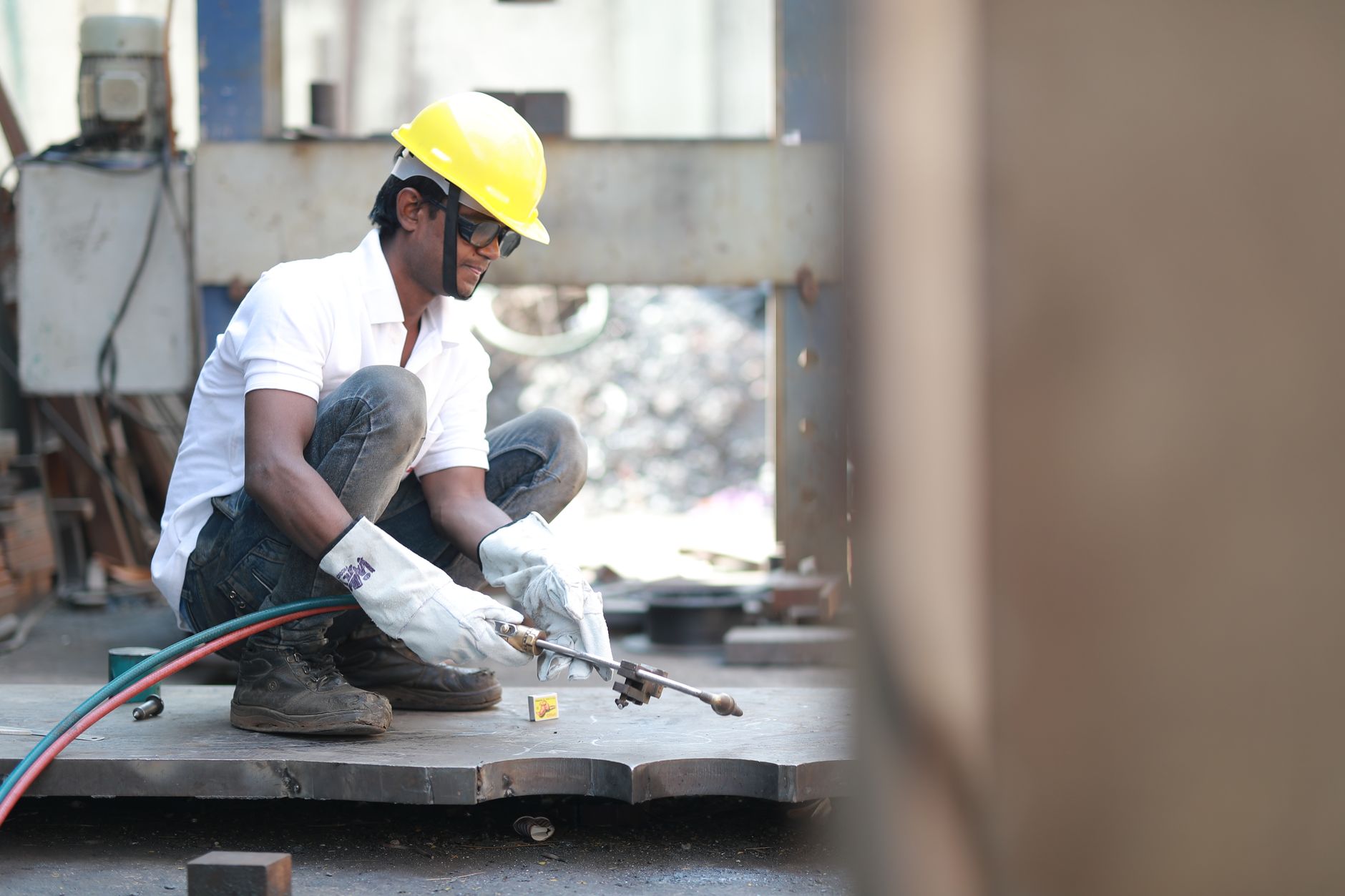
According to the American Welding Society forum, the thickest part at the point of welding sets the preheat requirement. In the example given there, a 3 inch thick base plate governed the preheat for the whole joint. The same thread notes that operations commonly use preheat before welding steel plate or pipe that is 1 inch thick or more.
Thickness is not the only factor. Heavy restraint, base metal chemistry, cold ambient conditions, high hydrogen in the weld metal and low heat input can all push the required preheat higher, according to the same sources. A shop that quotes you without asking about the steel grade and the joint design is guessing.
Preheat and interpass temperature, in plain language
Preheat is the minimum temperature the steel must reach before welding starts. Interpass temperature is the temperature of the weld area between passes. Interpass cannot fall below the preheat temperature, a point the AWS Welding Digest covers in its June 2025 article on determining preheat and interpass temperatures.
Thick joints can take dozens of passes, so the shop has to keep the temperature up through the whole job, not only at the start. One AWS forum reply stresses that the minimum preheat must be confirmed just before the arc is struck for each pass. In practice, that means temperature sticks or contact thermometers in the shop, and someone actually using them.
What the numbers can look like
- TWI, the UK welding research organization, says preheat may be as high as 200°C when welding thick sections of steel with a high carbon equivalent.
- A forum user ran a 4 inch, Grade 70 plate through Lincoln’s preheat calculator and got a minimum of 185°F. That is a secondhand example, so treat it as an illustration only.
- A case published by STRUCTURE magazine involved 3¼ inch plates. A 225°F preheat met the table value in D1.1:2015, but a hydrogen control calculation indicated roughly 300 to 320°F. The author also notes that insufficient preheat is rarely the only cause of cracking.
The lesson is that the table value is a starting point. For thick, restrained joints, a careful shop checks whether the table is enough, or whether a calculation based on hydrogen control and the steel’s composition is warranted.
The procedure matters more than the machine
For structural work, many shops follow AWS D1.1. According to the AWS Welding Digest, fabricators usually start from the prequalified preheat values in Table 5.8. Qualification testing is still required when using preheat and interpass temperatures lower than the table lists.
The code also offers alternative routes. Annex B describes a heat affected zone hardness control method, limited to fillet welds, and a hydrogen control method. TWI explains the logic of the second one: cracking is avoided if the hydrogen remaining in the joint after it cools to about 50°C stays below a critical value that depends on the steel and the level of restraint. That approach is especially useful for high strength, low alloy steels with high hardenability.
Qualification limits also matter for thick work. One AWS forum reply notes that when a procedure is qualified by testing, the approved thickness range is limited. The maximum is 2T unless the test is run on plate at least 1 inch thick. If your plate is thicker than what the shop qualified, the procedure may not cover your job.
Heavy sections and restraint
AISC defines heavy sections as rolled shapes with flange thicknesses above 2 inches, and built up heavy shapes made of plate above the same dimension. Welding these is considered highly restrained, which raises residual stress concerns. If your project involves columns, base plates or crane components in that range, say so when you ask for a quote. It changes the procedure, the inspection plan and the schedule.
Questions to ask a shop before you commit
Which code and procedure will govern?
Ask for the written welding procedure and its qualification record for your thickness and steel grade.
How do you set preheat?
A good answer references the steel grade, the thickest member, restraint and the code. A weak answer is a single number given from memory.
How is temperature monitored between passes?
You want a named method and a person responsible for it.
How do you control hydrogen?
Ask about storage and handling of consumables, since hydrogen in the weld metal is one of the factors that raises preheat needs.
What inspection comes after welding?
Cracks in thick joints can be hidden, so ask what testing is planned and who performs it.
Are the welders qualified for this thickness?
Ask for current certifications, not general experience.
Your own paperwork helps too. The drawings, steel specification and any code requirement should go to the shop up front. For the final preheat and procedure values, the governing code, the material specification and a qualified engineer have the last word, not a blog article.
Process choice for thick joints
The process affects deposition rate and how much heat goes into the joint. If you want a refresher on the main options, our guide to the main welding types: MMA, MIG/MAG, TIG and flame compares them. For high deposition work, the page on semi-automatic MIG and MAG welding explains how that family of processes works. If your plate is stainless, read about the pitfalls of welding stainless steel first, because heat control is handled differently than on carbon steel.
Finding a shop in Houston
If you are sourcing work locally, our Houston welding guide for 2026 covers services, costs and how to choose a shop. Use it alongside the questions above. Price is worth comparing, but a quote that looks low because it skips preheat control or inspection will cost more once a joint has to be gouged out and redone.
One more context point: the industry is short of skilled people. Our coverage of a new welding school opening amid the U.S. welder shortage shows why qualified heavy plate welders can be hard to book. Ask about lead times early.
What to remember
- Plate from about 1 inch thick is where preheat commonly comes in, and the thickest member sets the requirement.
- Interpass temperature cannot drop below preheat, and it has to be checked before each pass.
- Code tables are a starting point. Thick, restrained joints in high strength steel may need a hydrogen control calculation.
- A procedure qualified on thinner plate may not cover your job.
- Ask for the written procedure, the welder certifications and the inspection plan before work begins.